

Jalan Jl. Medan No.7 Ulak Karang Selatan, Padang Utara, Kota Padang, Sumatera Barat.
Telp. (0751) 444325 dan HP 0813-6333-0024
Email : zai.abadi84@gmail.com

Jalan Jl. Medan No.7 Ulak Karang Selatan, Padang Utara, Kota Padang, Sumatera Barat.
Telp. (0751) 444325 dan HP 0813-6333-0024
Email : zai.abadi84@gmail.com

Jalan Damar Nomor 30 Panakukkang V, Makassar, Sulawesi Selatan. Contact Person : Rusdi Idrus Telp 0813 55066700; Email : konsillsmsulsel@yahoo.co.id

Indonesian NGO Council hosted a meeting between ICCO Regional Office of South-East Asia and the Pacific with the NGO partners, in Jakarta (7/1). The meeting was attended by civil society organizations that have become the ICCO partner INFID (International NGO Forum on Indonesian Development), Indonesian Women’s Coalition, Penabulu, Indonesia Association for Media Development (PPMP) and HuMa (Community and Ecological based Society for Land Reform). While the Indonesian NGO Council is still in the exploratory stage of cooperation with ICCO
Indonesian NGO Council hosted a meeting between ICCO Regional Office of South-East Asia and the Pacific with the NGO partners, in Jakarta (7/1). The meeting was attended by civil society organizations that have become the ICCO partner INFID (International NGO Forum on Indonesian Development), Indonesian Women’s Coalition, Penabulu, Indonesia Association for Media Development (PPMP) and HuMa (Community and Ecological based Society for Land Reform). While the Indonesian NGO Council is still in the exploratory stage of cooperation with ICCO.

Mass Organizations Act assessed can be caused ambiguous interpretations , multiple interpretations and curb the fulfillment of the constitutional rights of the state colors .
Merasa mengalami kerugian konstitusional secara nyata, Koalisi Kebebasan Berserikat resmi mendaftarkan uji materi sejumlah pasal dalam UU No. 17 Tahun 2013 Tentang Organisasi Massa ke MK. Koalisi yang beranggotakan dari FITRA, ICW, YLBHI, YAPPIKA ini secara khusus menguji 11 pasal yaitu Pasal 1 angka 1, Pasal 1 angka 6, Pasal 5, Pasal 8, Pasal 10, Pasal 11, Pasal 23, Pasal 29 ayat (1), Pasal 42 ayat (2), Pasal 57 ayat (2) dan (3), serta Pasal 59 ayat (2) huruf b, c, dan e.
“Dalam implementasinya, UU Ormas ini banyak merugikan hak-hak warga negara dan mengekang kebebasan berserikat dan berkumpul yang dialami pemohon,” kata Koordinator Tim Advokasi untuk Kebebasan Berserikat, Wahyudi Djafar usai mendaftarkan uji materi UU Ormas di Gedung MK, Jakarta (20/12).
Salah satunya dialami Forum Indonesia untuk Tranparansi Anggaran (FITRA) Sumatera Utara, yang mendapat penolakan mendapatkan dokumen Rencana Kerja Anggaran (RKA) dari Dinas Komunikasi dan Informasi Kabupaten Karo. Alasannya, organisasi itu tidak terdaftar di Kantor Kesatuan Bangsa Politik dan Perlindungan Masyarakat Kabupaten Karo sesuai UU Ormas. Padahal, FITRA Sumut merupakan organisasi berbadan hukum yayasan.
“Organisasi berbadan hukum tidak wajib mendaftarkan diri karena telah otomatis terdaftar sesuai Pasal 15 UU Ormas,” kata Wahyudi.
Dia menilai UU Ormas selain telah menimbulkan ketidakpastian hukum, juga melahirkan penafsiran yang ambigu, multitafsir dan mengekang pemenuhan hak-hak konstitusional warna negara. Selain itu, UU Ormas menegaskan kembali lebih pada pendekatan politik terhadap sosial kemasyarakatan ketimbang pada prinsip negara hukum.
Hal itu dapat dilihat dalam ketentuan tentang tata cara pemilihan kepengurusan Ormas pada Pasal 29 ayat (1) dan penyelesaian sengketa Pasal 57 ayat (1) dan (3). “Pasal tersebut telah memberi ruang bagi pemerintah untuk masuk dalam urusan internal organisasi dan telah mengancam independensi organisasi dalam kebebasan berserikat,” tudingnya.
Pasal 1 angka 6 yang menyatakan Menteri adalah menteri yang menyelenggarakan urusan pemerintahan di bidang dalam negeri diubah menjadi Kemenkumham. “Kita mendorong judisialisasi politik dan itu harus diatur oleh Kemenkumham. Sebab, Kemendagri cenderung sangat politis,” katanya.
Sementara Presiden Federasi Serikat Pekerja Metal Indonesia, Saiq Iqbal menilai definisi Ormas dalam Pasal 1 angka 1 dan Pasal 5 terlalu luas, sehingga organisasi atau asosiasi apapun bisa dikategorikan Ormas. Hal ini telah mempersempit hak kebebasan berserikat dan berkumpul yang dijamin konstitusi.
“Organisasi apapun masuk ke definisi Ormas, sehingga setiap pasal dalam UU ormas, definisi itu menempel. Pemerintah juga bisa ikut campur dan bahkan membubarkan organisasi tersebut,” tegasnya.
Karena itu, menurut Said, DPR dan Pemerintah sebaiknya membuat UU Perkumpulan tanpa menghubungkan kata-kata ormas. “Istilah ormas itu sebenarnya tidak ada. Itu hadir saat rezim Soeharto,” tambahnya.
Sebelumnya, Pimpinan PP Muhammadiyah telah menguji sekitar 20 pasal dalam UU Ormas yang diajukan sejak September silam. Persidangannya sendiri sudah memasuki tahap mendengarkan keterangan ahli. Pasal-pasal yang diuji yaitu Pasal 1 angka 1, Pasal 4, Pasal 5, Pasal 8, Pasal 9, Pasal 10, Pasal 11, Pasal 21, Pasal 23, Pasal 24, Pasal 25, Pasal 30 ayat (2), Pasal 33 ayat (1), (2), Pasal 34, Pasal 35, Pasal 36, Pasal 38, Pasal 40 ayat (1), (2), (3), (4), (5), (6), Pasal 57 ayat (2), (3), Pasal 58, Pasal 59 ayat (1), (3) huruf a UU Ormas.
Muhammadiyah beralasan pasal-pasal tersebut bertentangan dengan paragraf keempat Pembukaan UUD 1945 dan UUD 1945. UU Ormas membatasi atau mengekang kebebasan berserikat dan berkumpul dengan dalih menciptakan ketertiban yang dibungkus melalui Undang-Undang yang bersifat represif dan mengandung nuansa birokratis. Pemohon meminta MK membatalkan 21 pasal itu.
Misalkan, Pasal 38 yang intinya ormas perlu mengumumkan laporan keuangan kepada publik secara berkala. Pemohon berdalih pasal ini hanya mengada-ada dan mereduksi makna Pasal 28E ayat (3) UUD 1945. Sebab, proses pertanggungjawaban apapun oleh ormas merupakan hak prerogatif ormas itu sendiri. Pasal 40 yang berbunyi, “Pemerintah dan/atau Pemerintah Daerah melakukan pemberdayaan ormas untuk meningkatkan kinerja dan menjaga keberlangsungan hidup ormas” juga dinilai berpotensi korupsi atas nama pemberdayaan ormas.
http://www.hukumonline.com
It has always been a weakness for many small non-government organisations that donors tend to ‘own’ them and their programmes in the communities where they work. But a new model in development—community philanthropy—is emerging through forms of community foundations shaped by local context.
It could be the new driving force for local communities to more actively and effectively manage their programmes given their sharper sense of ownership, a stronger trust among each other based on common culture and thus, a more personal sense of accountability. “Community philanthropy organisations are organic, rooted in local culture and thus, do not necessarily adhere to the standards of someone else’s notion,” says Halima Mohamed of TrustAfrica.
Although booming only in the last two years, community philanthropy is not exactly a new concept. Between 2000 and 2010 alone, community foundations grew by a staggering 86 per cent, averaging with 70 new institutions born annually. But apart from the traditional values of NGO activities—organised structure, self-direction, an openness of its strategies of engagement and being a civil society institution—community philanthropy takes on enabling local groups to use their own assets and building an inclusive and equitable society guided by local context.
This makes for a reciprocity based on a principle of solidarity, providing for wider public benefits as opposed to that contained or limited to certain privileged groups in the community—whether internally in a community or externally. These benefits transcend traditional tangible results; they also yield trust, community leadership, social capital, sustainability and reduction of the attitude of dependency—factors typically regarded as important yet very hard to measure.
The rise of community philanthropy, mostly through local community foundations, have also been vital in democracy-building, such as the case of Egypt’s Waqfeyat al Maadi Community Foundation; and in changing people’s mindsets, as in the success of the Dalia Association in Palestine demonstrates.
With civil society in Egypt deeply rooted in its history of conflicts and political turmoil, Waqfeyat al Maadi seeks to revive and modernise the concept of endowment to encourage sustainable non-governmental financing and development in the country. To kick-start and support development efforts, the organisation has been working since 2007, a bit before the Arab spring, to close the gap between the rich and the poor in Al-Maadi and improve the residents’ standard of living through social endowment.
Palestine’s Dalia, meanwhile, organised an art competition called ‘Momentum for Philanthropy’ that called for poetry, short stories, videos and photographs from youth entrants from Palestinians across the world. The competition showcased examples of Palestinian philanthropy to change the concept that [Palestinians] receive help but do not give any.
Despite these organisations being small, local people are both taking the lead in the works and are contributing their own resources. At its core, community philanthropy thus harnesses the passions and dedication of local communities to enable their members to help each other even at a personal level—which is very well a natural group dynamic in any society.
In India, the Prayatna Foundation has brought together over 5,000 residents across 50 villages, mobilising Dalit and Muslims to contribute their time, resources and knowledge to work together on addressing housing and unemployment issues, protecting their human rights and pushing for government accountability and social justice. With a history of religious divide between Hindus and Muslims, both groups have now forged connections together to develop the skills of local leaders in bringing real development in their community.
In Nepal, the Tewa Foundation has rallied over 3,000 local donors. Giving has become intimately connected with identity, being an important their culture. It has been a powerful means of bridging the varying interests and patching gaps of differing opinions; but still offering a sense of hope for sustainable interventions that transform their community away from dependency from external aid. The people’s use of their own money to carry out their programmes has thus affirmed the legitimacy of the organisations’ legitimacy.
The alternative model that Tewa presents is grounded in local realities. Despite a troubled history and a deeply conflicted contemporary cultural landscape, Tewa has done away with many of the established hierarchies of gender divide, social classes and the caste system, ethnic divisions and even geography. This shows an empowered civil society with an all-inclusive structure that can be transparent and accountable; as well as trusting and respectful. And global foundations are certainly not one to ignore this new emerging value system.
“Community philanthropy leads to better results for development works. If people feel like they’re co-investors in their own development, bring their own assets to the table and are enabled to govern the works, then they care more of the outcomes and are more accountable in ways that build social capital. The power dynamics are more equal in a partnership setting, not the traditional donor-beneficiary relationship,” says Jenny Hodgson of the Global Fund for Community Foundations.
The Aga Khan Foundation, together with the Mott Foundation, The Rockefeller Brothers Fund and the Global Fund for Community Foundations, has rallied partners across the globe—donors and NGO recipients alike—to pursue community philanthropy in their respective scopes of work. They all agree that having local people involved as donors is a game-changer in efforts to build civil society and enhances prospects for sustainability of (external) funding even when the programme has been completed.
“We have worked on civil society for a long time. When people do things for themselves, those programmes have been the most sustainable. Leadership, financial resources and voluntary support are all sustained,” says Aga Khan Foundation CEO Mirza Jahani.
If community-level collaboration has the power to transform societies from within, using local resources and talent, then it’s about time that corporate philanthropy becomes a mainstream development strategy not only for local NGOs and civil society groups. Rather, it is an engagement policy that multi-lateral donor agencies can integrate into their collaborations with NGOs and CSOs, particularly in developing countries. And that programmes should develop the capacities of local organisations’ community philanthropy, making them more effective partners with foundations and development agencies.
The collective and inclusive picture of community philanthropy—as a new model for development and civil society engagement—sends a powerful message for the ‘within group’ and ‘between group’ dynamics in a society. Such a process holds high potentials to resolve, if not avert conflicts—armed or political; builds harmony and frames an equitable point of reference for real development to take place: one that empowers each member of every level of the community. (With reports from the Aga Khan Foundation and the Mott Foundation)
Source link: http://asianngo.org/news/content/original/community-philanthropy-new-model-development
It has always been a weakness for many small non-government organisations that donors tend to ‘own’ them and their programmes in the communities where they work. But a new model in development—community philanthropy—is emerging through forms of community foundations shaped by local context.
It could be the new driving force for local communities to more actively and effectively manage their programmes given their sharper sense of ownership, a stronger trust among each other based on common culture and thus, a more personal sense of accountability. “Community philanthropy organisations are organic, rooted in local culture and thus, do not necessarily adhere to the standards of someone else’s notion,” says Halima Mohamed of TrustAfrica.
Although booming only in the last two years, community philanthropy is not exactly a new concept. Between 2000 and 2010 alone, community foundations grew by a staggering 86 per cent, averaging with 70 new institutions born annually. But apart from the traditional values of NGO activities—organised structure, self-direction, an openness of its strategies of engagement and being a civil society institution—community philanthropy takes on enabling local groups to use their own assets and building an inclusive and equitable society guided by local context.
This makes for a reciprocity based on a principle of solidarity, providing for wider public benefits as opposed to that contained or limited to certain privileged groups in the community—whether internally in a community or externally. These benefits transcend traditional tangible results; they also yield trust, community leadership, social capital, sustainability and reduction of the attitude of dependency—factors typically regarded as important yet very hard to measure.
The rise of community philanthropy, mostly through local community foundations, have also been vital in democracy-building, such as the case of Egypt’s Waqfeyat al Maadi Community Foundation; and in changing people’s mindsets, as in the success of the Dalia Association in Palestine demonstrates.
With civil society in Egypt deeply rooted in its history of conflicts and political turmoil, Waqfeyat al Maadi seeks to revive and modernise the concept of endowment to encourage sustainable non-governmental financing and development in the country. To kick-start and support development efforts, the organisation has been working since 2007, a bit before the Arab spring, to close the gap between the rich and the poor in Al-Maadi and improve the residents’ standard of living through social endowment.
Palestine’s Dalia, meanwhile, organised an art competition called ‘Momentum for Philanthropy’ that called for poetry, short stories, videos and photographs from youth entrants from Palestinians across the world. The competition showcased examples of Palestinian philanthropy to change the concept that [Palestinians] receive help but do not give any.
Despite these organisations being small, local people are both taking the lead in the works and are contributing their own resources. At its core, community philanthropy thus harnesses the passions and dedication of local communities to enable their members to help each other even at a personal level—which is very well a natural group dynamic in any society.
In India, the Prayatna Foundation has brought together over 5,000 residents across 50 villages, mobilising Dalit and Muslims to contribute their time, resources and knowledge to work together on addressing housing and unemployment issues, protecting their human rights and pushing for government accountability and social justice. With a history of religious divide between Hindus and Muslims, both groups have now forged connections together to develop the skills of local leaders in bringing real development in their community.
In Nepal, the Tewa Foundation has rallied over 3,000 local donors. Giving has become intimately connected with identity, being an important their culture. It has been a powerful means of bridging the varying interests and patching gaps of differing opinions; but still offering a sense of hope for sustainable interventions that transform their community away from dependency from external aid. The people’s use of their own money to carry out their programmes has thus affirmed the legitimacy of the organisations’ legitimacy.
The alternative model that Tewa presents is grounded in local realities. Despite a troubled history and a deeply conflicted contemporary cultural landscape, Tewa has done away with many of the established hierarchies of gender divide, social classes and the caste system, ethnic divisions and even geography. This shows an empowered civil society with an all-inclusive structure that can be transparent and accountable; as well as trusting and respectful. And global foundations are certainly not one to ignore this new emerging value system.
“Community philanthropy leads to better results for development works. If people feel like they’re co-investors in their own development, bring their own assets to the table and are enabled to govern the works, then they care more of the outcomes and are more accountable in ways that build social capital. The power dynamics are more equal in a partnership setting, not the traditional donor-beneficiary relationship,” says Jenny Hodgson of the Global Fund for Community Foundations.
The Aga Khan Foundation, together with the Mott Foundation, The Rockefeller Brothers Fund and the Global Fund for Community Foundations, has rallied partners across the globe—donors and NGO recipients alike—to pursue community philanthropy in their respective scopes of work. They all agree that having local people involved as donors is a game-changer in efforts to build civil society and enhances prospects for sustainability of (external) funding even when the programme has been completed.
“We have worked on civil society for a long time. When people do things for themselves, those programmes have been the most sustainable. Leadership, financial resources and voluntary support are all sustained,” says Aga Khan Foundation CEO Mirza Jahani.
If community-level collaboration has the power to transform societies from within, using local resources and talent, then it’s about time that corporate philanthropy becomes a mainstream development strategy not only for local NGOs and civil society groups. Rather, it is an engagement policy that multi-lateral donor agencies can integrate into their collaborations with NGOs and CSOs, particularly in developing countries. And that programmes should develop the capacities of local organisations’ community philanthropy, making them more effective partners with foundations and development agencies.
The collective and inclusive picture of community philanthropy—as a new model for development and civil society engagement—sends a powerful message for the ‘within group’ and ‘between group’ dynamics in a society. Such a process holds high potentials to resolve, if not avert conflicts—armed or political; builds harmony and frames an equitable point of reference for real development to take place: one that empowers each member of every level of the community. (With reports from the Aga Khan Foundation and the Mott Foundation)
Source link: http://asianngo.org/news/content/original/community-philanthropy-new-model-development

In the Fifth Session of the Open Working Group (OWG-5) on Sustained and Inclusive Economic Growth, Professor Jeffrey Sachs from the Earth Institute, Columbia University talk about macroeconomic policy, infrastructure development and industrialization.
In essence Sachs explained 10 focus the sustainable development goals are end extreme poverty, achieve development, social inclusion, education for all, universal health coverage , food security and sustainable agriculture, climate change and sustainable energy, conservation of biodiversity and ecosystems, resilient and sustainable cities, good governance in its multiple forms eg governments, companies and major organizations.
Ten goals, according to Sachs, as our ‘last best hope for finding the way forward’. And the goals will increasingly find strength when children grade 4 elementary schools around the world say and pledge it.
Dalam pertemuan Kelompok Kerja Terbuka ke 5 mengenai Pertumbuhan Ekonomi Berkelanjutan dan Inklusif di Amerika Serikat, Profesor Jeffrey Sachs dari Earth Institute, Universitas Columbia berbicara soal kebijakan makro ekonomi, pembangunan infrastruktur dan industrialisasi.
Pada intinya Sachs memaparkan 10 fokus tujuan dari pembangunan berkelanjutan yakni mengakhiri kemiskinan, pembangunan yang tercapai, inklusi sosial, pendidikan untuk semua, layanan kesehatan yang universal, ketahanan pangan dan pertanian berkelanjutan, perubahan iklim dan energi yang berkelanjutan, konservasi keanekaragaman hayati dan ekosistem, kota yang tangguh dan berkelanjutan, serta tata kelola yang baik untuk organisasi pemerintah, perusahaan dan organisasi swasta besar.
Kesepuluh tujuan ini, menurut Sachs, merupakan harapan terakhir dalam mencapai masa depan. Dan sepuluh tujuan ini akan semakin menemukan kekuatannya apabila anak-anak kelas 4 sekolah dasar di seluruh dunia mengucapkan dan mengikrarkannya.
Global warming on climate change , making some NGO in Bangladesh urged the government to save the natural conditions. Some of these NGO include : Bangladesh Poribesh Andolon (BAPA), Bangladesh Indigenous People’s Network for Climate Change and Bio-Diversity (BIPNetCCBD), Campaign for Sustainable Rural Livelihood (CSRL), Centre for Global Change (CGC), Climate Change Development Forum (CCDF), Climate Finance Governance Network (CFGN), Coastal Development Partnership (CDP) and Equity and Justice Working Group Bangladesh (EquityBD).
In a press conference held some time ago , Dr. Abdul Matin of Father reveals need explicit nature of the government . Including determining its own climate policy . Not just demanding climate aid from developed countries .
Golam Mortoza , editor of the Weekly Shaptahik , also revealed the need for the State ‘s commitment to protecting the climate and negotiating with other countries . Because sympathy lower than developed countries will not be enough to help .
Warsaw outcome has seriously undermined the CVC interest
NGO News Report :: (Dhaka, 30th November 2013) Today 8 climate focused civil society networks in a press conference urge the government to work out the future climate action plan with own resource and capacity as the latest CoP-19 outcome has seriously undermined the interest of LDC and CVC (Climate Victim Countries) in facing climate changed present and future negative impact.
The press conference titled “CoP-19 outcome: Interest of climate victim countries are really vulnerable” is organized by eight Bangladeshi climate focused civil society networks namely Bangladesh Poribesh Andolon (BAPA), Bangladesh Indigenous People’s Network for Climate Change and Bio-Diversity (BIPNetCCBD), Campaign for Sustainable Rural Livelihood (CSRL), Centre for Global Change (CGC), Climate Change Development Forum (CCDF), Climate Finance Governance Network (CFGN), Coastal Development Partnership (CDP) and Equity and Justice Working Group Bangladesh (EquityBD).
The keynote paper is presented by Syed Aminul Hoque of EquityBD while Dr. Abdul Matin of BAPA moderates the press conference. Among other Dr. Ahsanuddin Ahmed of CGC, Md Golam Mortuza of Weekly Saptahik and Mostafa Kamal Akand of EquityBD speak before the press.
In the written statement Syed Aminul Haque mentions that the CVC has gained very little out of the climate talk in Warsaw because of frequent non-cooperative attitude of developed countries who are the biggest emitter and responsible for the climate warming. He adds that the most promising area of LDC and CVC’s interest were the Loss & Damage issue, which has been concluded with a hollow set up of working mechanism with deferred to a three year period up to 2016 and without making any clarity on financing being strongly opposed by USA and EU allies especially by Australia.
The keynote paper recommends that Bangladesh shouldn’t wait for some million dollars of aid where the country has more than 15b of remittance. Bangladesh should design the own national climate plan for the future in compliance with the national five year plan.
Dr. Ahsan Uddin in his speech says that, Bangladesh and the other LDCs now facing to strong opposition i.e. Annex 1 countries along with the recently developed LMDC (Like Minded Developing Countries) like India, China and Australia etc. They are just obstructing the climate talks in every step. They have pushed down the Loss & Damage, the long expected issue of LDC and CVCs, towards an uncertainty. The developed countries are offering just a $100m over the promised $100b.
Golam Mortoza, the editor of Weekly Shaptahik, says that, the government delegation of Bangladesh in COP should be more committed to the country and skilled to face the negotiators. Because, a little humble sympathy from the developed countries would not be enough for us. We have to recognize our demand with our own right.
Dr. Abdul Matin of BAPA says that we should not only focus on claiming climate fund. We have to revise our own climate policy so that we can address the power plant like Rampal and enormous corruption. Otherwise we will be morally and logically weak in the international climate negotiations in future.
http://ngonewsbd.com/warsaw-outcome-undermined-cvc-interest/
(ADS)
Pemanasan global yang bepengaruh pada perubahan iklim, membuat beberapa LSM di Bangladesh mendesak pemerintah untuk menyelamatkan kondisi alam. Beberapa LSM tersebut diantaranya: Bangladesh Poribesh Andolon (BAPA), Bangladesh Indigenous People’s Network for Climate Change and Bio-Diversity (BIPNetCCBD), Campaign for Sustainable Rural Livelihood (CSRL), Centre for Global Change (CGC), Climate Change Development Forum (CCDF), Climate Finance Governance Network (CFGN), Coastal Development Partnership (CDP) and Equity and Justice Working Group Bangladesh (EquityBD).
Dalam konfrensi pers yang diadakan beberapa waktu lalu, Dr Abdul Matin dari BAPA mengungkapkan perlu sifat yang tegas dari pemerintah. Termasuk menentukan kebijakan iklimnya sendiri. Bukan hanya sekedar menuntut bantuan dana iklim dari Negara maju.
Golam Mortoza , editor dari Weekly Shaptahik , juga mengungkapkan perlunya komitmen Negara dalam melindungi iklim dan negosiasi dengan Negara lain. Pasalnya simpati rendah dari Negara maju tidak akan cukup membantu.
Materi berita:
Warsaw outcome has seriously undermined the CVC interest
NGO News Report :: (Dhaka, 30th November 2013) Today 8 climate focused civil society networks in a press conference urge the government to work out the future climate action plan with own resource and capacity as the latest CoP-19 outcome has seriously undermined the interest of LDC and CVC (Climate Victim Countries) in facing climate changed present and future negative impact.
The press conference titled “CoP-19 outcome: Interest of climate victim countries are really vulnerable” is organized by eight Bangladeshi climate focused civil society networks namely Bangladesh Poribesh Andolon (BAPA), Bangladesh Indigenous People’s Network for Climate Change and Bio-Diversity (BIPNetCCBD), Campaign for Sustainable Rural Livelihood (CSRL), Centre for Global Change (CGC), Climate Change Development Forum (CCDF), Climate Finance Governance Network (CFGN), Coastal Development Partnership (CDP) and Equity and Justice Working Group Bangladesh (EquityBD).
The keynote paper is presented by Syed Aminul Hoque of EquityBD while Dr. Abdul Matin of BAPA moderates the press conference. Among other Dr. Ahsanuddin Ahmed of CGC, Md Golam Mortuza of Weekly Saptahik and Mostafa Kamal Akand of EquityBD speak before the press.
In the written statement Syed Aminul Haque mentions that the CVC has gained very little out of the climate talk in Warsaw because of frequent non-cooperative attitude of developed countries who are the biggest emitter and responsible for the climate warming. He adds that the most promising area of LDC and CVC’s interest were the Loss & Damage issue, which has been concluded with a hollow set up of working mechanism with deferred to a three year period up to 2016 and without making any clarity on financing being strongly opposed by USA and EU allies especially by Australia.
The keynote paper recommends that Bangladesh shouldn’t wait for some million dollars of aid where the country has more than 15b of remittance. Bangladesh should design the own national climate plan for the future in compliance with the national five year plan.
Dr. Ahsan Uddin in his speech says that, Bangladesh and the other LDCs now facing to strong opposition i.e. Annex 1 countries along with the recently developed LMDC (Like Minded Developing Countries) like India, China and Australia etc. They are just obstructing the climate talks in every step. They have pushed down the Loss & Damage, the long expected issue of LDC and CVCs, towards an uncertainty. The developed countries are offering just a $100m over the promised $100b.
Golam Mortoza, the editor of Weekly Shaptahik, says that, the government delegation of Bangladesh in COP should be more committed to the country and skilled to face the negotiators. Because, a little humble sympathy from the developed countries would not be enough for us. We have to recognize our demand with our own right.
Dr. Abdul Matin of BAPA says that we should not only focus on claiming climate fund. We have to revise our own climate policy so that we can address the power plant like Rampal and enormous corruption. Otherwise we will be morally and logically weak in the international climate negotiations in future.
http://ngonewsbd.com/warsaw-outcome-undermined-cvc-interest/
(ADS)

Between more traditional channels of communications like direct mail, email, and newsletters and all the new channels you’ve adopted, like social media, multimedia, and blogs, there’s a lot to think about when it comes to your organization’s messaging. How do you create and maintain a consistent voice across so many channels? How do you coordinate your various communications to work in tandem rather than competing, engaging constituents and inspiring them to take action rather than confusing, overwhelming, or annoying them?
Channels cannot thrive in a vacuum. Your constituents will think of them all as one voice—your nonprofit’s—and so should you.
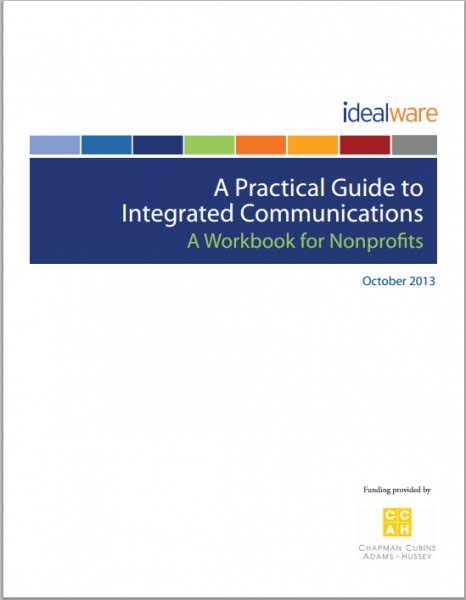
Idealware partnered with Chapman Cubine Adams + Hussey to create A Practical Guide to Integrated Communications: A Workbook for Nonprofits to help organizations like yours understand how to plan, schedule, and integrate communications into cohesive messaging around your campaigns and the equally important times between them. We also thank our friends at Russ Reid for their support of this workbook.
Designed around 18 worksheets, this free workbook identifies and defines the categories of communications, explores their roles in your messaging, and helps you assess your current state of effectiveness before walking you through the planning, scheduling, and implementation stages. Along the way, you’ll learn to measure the response you’re getting to adapt your techniques for better results, and ultimately learn to holistically integrate your communications.
The worksheets can be completed at your own pace and convenience. Whether you dive in alone or work with other stakeholders at your organization, by the time you finish you’ll have a better understanding of the tactics and techniques for successful communications.
Need more help? We also included a directory of experienced consultants in which you can find the right firm to work with to implement this information.
Take the first step. Download the free workbook today.
Between more traditional channels of communications like direct mail, email, and newsletters and all the new channels you’ve adopted, like social media, multimedia, and blogs, there’s a lot to think about when it comes to your organization’s messaging. How do you create and maintain a consistent voice across so many channels? How do you coordinate your various communications to work in tandem rather than competing, engaging constituents and inspiring them to take action rather than confusing, overwhelming, or annoying them?
Channels cannot thrive in a vacuum. Your constituents will think of them all as one voice—your nonprofit’s—and so should you.
Idealware partnered with Chapman Cubine Adams + Hussey to create A Practical Guide to Integrated Communications: A Workbook for Nonprofits to help organizations like yours understand how to plan, schedule, and integrate communications into cohesive messaging around your campaigns and the equally important times between them. We also thank our friends at Russ Reid for their support of this workbook.
Designed around 18 worksheets, this free workbook identifies and defines the categories of communications, explores their roles in your messaging, and helps you assess your current state of effectiveness before walking you through the planning, scheduling, and implementation stages. Along the way, you’ll learn to measure the response you’re getting to adapt your techniques for better results, and ultimately learn to holistically integrate your communications.
The worksheets can be completed at your own pace and convenience. Whether you dive in alone or work with other stakeholders at your organization, by the time you finish you’ll have a better understanding of the tactics and techniques for successful communications.
Need more help? We also included a directory of experienced consultants in which you can find the right firm to work with to implement this information.
Take the first step. Download the free workbook today.
